
 RINGS
RINGS EARRINGS
 PENDANTS
 CHAIN
CHAIN IMPERIAL NECKLACE
 MAISON BRACELET
 CASA DI LUCE BROOCH
 URBAN COLLECTION
 NATURAL DIAMONDS
 LAB GROWN DIAMONDS
Lab-Grown vs Natural Diamonds: Which Is Right for You in 2026?
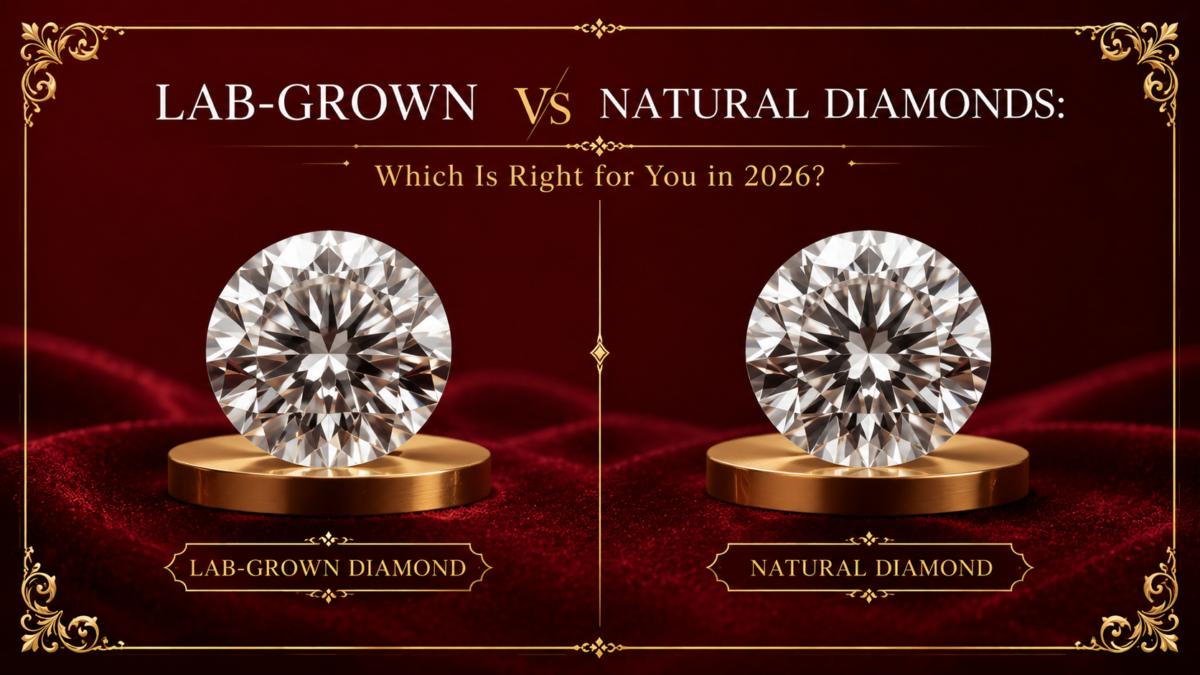
Few decisions in jewelry shopping spark more questions than this one: should you choose a lab-grown diamond or a natural diamond? Both are real diamonds — chemically, physically, and visually identical — but they differ in origin, price, and the values they represent.
In this guide, we’ll break down everything you need to know to make a confident, informed choice for your next diamond purchase.
What Is the Difference Between Lab-Grown and Natural Diamonds?
Natural diamonds form deep within the earth over billions of years, under intense heat and pressure, before being mined and cut into the gemstones we recognize.
Lab-grown diamonds are created in controlled laboratory environments using advanced technology that replicates the same natural conditions — heat, pressure, and carbon — but in a fraction of the time.
Here’s the important part: lab-grown diamonds are not imitations or simulants (like cubic zirconia). They have the same chemical composition, crystal structure, and optical properties as natural diamonds. The only real difference is where — and how — they were formed.
Lab-Grown vs Natural Diamonds: Price Comparison
This is often the deciding factor for many shoppers. Lab-grown diamonds are typically significantly more affordable than natural diamonds of the same size, cut, color, and clarity — often by a substantial margin.
This price difference exists because:
- Lab-grown diamonds can be produced more quickly and predictably than mining naturally occurring stones
- Natural diamond mining involves significant land exploration, extraction, and processing costs
- Supply of natural diamonds is finite, while lab-grown diamond production can scale with demand
For buyers who want a larger or higher-quality stone within a set budget, lab-grown diamonds often allow for an upgrade in size or clarity that might not be affordable in a natural stone.
Which Diamond Holds Its Value Better?
This is where the two options diverge most clearly.
Natural diamonds have historically maintained stronger resale and long-term value, partly due to their rarity and finite supply. They’re also widely recognized and accepted across generations, often holding sentimental and heirloom value over time.
Lab-grown diamonds, while equally beautiful and durable, currently have a different resale market. Because they can be produced repeatedly, they don’t carry the same scarcity-driven value as natural stones, and resale prices tend to be lower in comparison.
If long-term resale value is a top priority, natural diamonds are generally the safer choice. If your priority is getting the best size and quality for your immediate budget, lab-grown diamonds offer excellent value.
Sustainability and Ethical Sourcing: Lab-Grown Diamonds Explained
One of the biggest drivers behind the rise of lab-grown diamonds is the growing consumer demand for ethical, transparent sourcing.
Lab-grown diamonds offer:
- No mining-related land disturbance, since they’re created in a controlled facility rather than extracted from the earth
- Clearer supply chain traceability, since the origin is the lab itself rather than a complex global mining and distribution chain
- An alternative for conflict-free sourcing concerns, eliminating questions around mining practices in certain regions
That said, ethical sourcing isn’t exclusive to lab-grown diamonds. Many natural diamond suppliers now offer certified, conflict-free, and responsibly sourced stones with full chain-of-custody documentation. The key for any buyer — lab-grown or natural — is choosing a jeweler who’s transparent about where their diamonds come from and how they’re sourced.
Which Diamond Should You Choose?
There’s no universally “right” answer — it depends entirely on what matters most to you.
Choose a lab-grown diamond if you:
- Want the best possible size and clarity within your budget
- Prioritize a traceable, controlled origin
- Are drawn to the latest innovation in diamond technology
Choose a natural diamond if you:
- Value rarity and the idea that your stone formed over billions of years
- Want the strongest possible long-term resale value
- Are purchasing a piece intended to become a multi-generational heirloom
Both options are genuine diamonds — the choice comes down to your personal priorities, not the quality or beauty of the stone itself.
Frequently Asked Questions
Can you tell the difference between a lab-grown and natural diamond just by looking at it? No — lab-grown and natural diamonds are visually identical to the naked eye, and even to most jewelers without specialized equipment. Distinguishing between them requires specific gemological testing.
Are lab-grown diamonds “fake” diamonds? Not at all. Lab-grown diamonds are real diamonds with the same chemical and physical properties as natural diamonds. They are entirely different from diamond simulants like cubic zirconia or moissanite, which are different materials altogether.
Why are lab-grown diamonds cheaper than natural diamonds? Lab-grown diamonds are generally less expensive because they can be produced more quickly and consistently than natural diamonds, which require extensive mining, exploration, and extraction processes.
Do lab-grown diamonds last as long as natural diamonds? Yes. Lab-grown diamonds have the same hardness and durability as natural diamonds, making them just as suitable for everyday wear, including engagement rings.
Is a lab-grown diamond a good choice for an engagement ring? Many couples today choose lab-grown diamonds for engagement rings specifically because they allow for a larger or higher-clarity stone within a set budget, without compromising on beauty or durability.
Final Thoughts
Whether you choose a lab-grown or natural diamond, you’re choosing a genuine, beautiful stone that will sparkle for a lifetime. The decision ultimately comes down to your priorities — budget and size, or rarity and long-term resale value.
Whichever you choose, make sure you’re buying from a jeweler who’s transparent about sourcing, certification, and quality, so you can feel completely confident in your decision.
Ready to explore both options? Browse our diamond collection featuring both lab-grown and natural stones, each fully certified for your peace of mind.
